What to wear to a wedding, from the beach to city hall
Plenty of wedding invitations never print a dress code. They give a time, a place and perhaps a link to a website, and leave guests to work out what to wear to a wedding from those few details. A four o'clock ceremony in a vineyard asks for something very different from a Friday morning at the courthouse.
This guide reads those details with you: the invitation and the website first, then daytime or evening, the venue, the ceremony, the season, the colors a guest leaves to the couple, and shoes for lawns, sand and old floorboards. If the card says formal or black tie, what to wear to a formal wedding picks up from there.
Read the invitation and the wedding website
Start with the attire line if there is one; dress codes explained translates each common phrase. Wedding invitations also have wording of their own: "garden party attire" means light colors, florals and shoes that cope with grass, "beach formal" a pale suit with an open collar or a long, airy dress, and "festive" an invitation to wear color and a little sparkle.
Then open the wedding website. Many couples answer the dress question in an FAQ, mention whether you will be on a lawn, sand or cobblestones, and say whether the ceremony is indoors. Note whether the ceremony and the reception are in different places: a church service followed by a barn party calls for an outfit that works in both, plus a layer for the evening.
If nothing is written anywhere, ask. The couple, a parent or someone in the wedding party will be glad you checked, and their answer beats any rule in a guide.
Daytime or evening, and when to dress up
The start time sets the tone more than anything else. A ceremony that begins before about five in the afternoon is a daytime wedding: lighter colors, lighter fabrics, knee or midi lengths, and suits in grey, tan or light blue. A ceremony at six or later moves into evening territory, where dark suits, richer fabrics and longer hemlines feel right even without a formal dress line.
Dress up a level when the wedding is in the evening, when the venue is a ballroom, a historic hall or a fine restaurant, when the guest list is long and the invitation engraved, or when you are close family. At that end, the formal wedding guest outfits are the reference. Stay nearer smart casual at a small daytime wedding at home or at the courthouse, and for the many weddings in between, the semi-formal outfits are a reliable guide. Not sure where your wedding falls? Pick the occasion and see the outfits for it on your own photo.
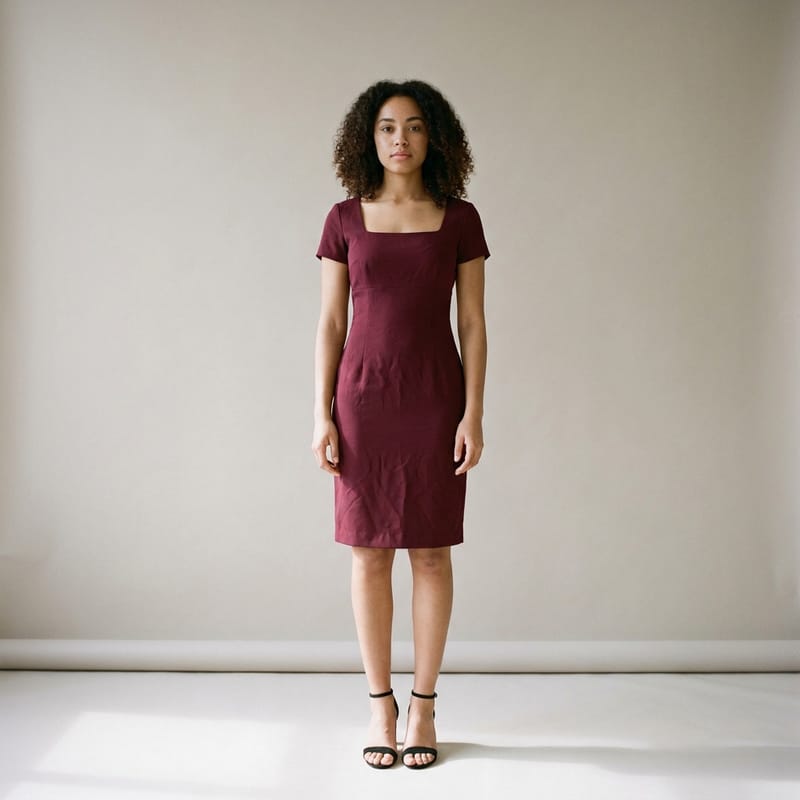
Cocktail dress
A knee-length burgundy dress handles the six o'clock ceremony that never mentions a dress code. The deep color reads evening, and the short sleeves keep it right for the church part of the day.
Try it on me →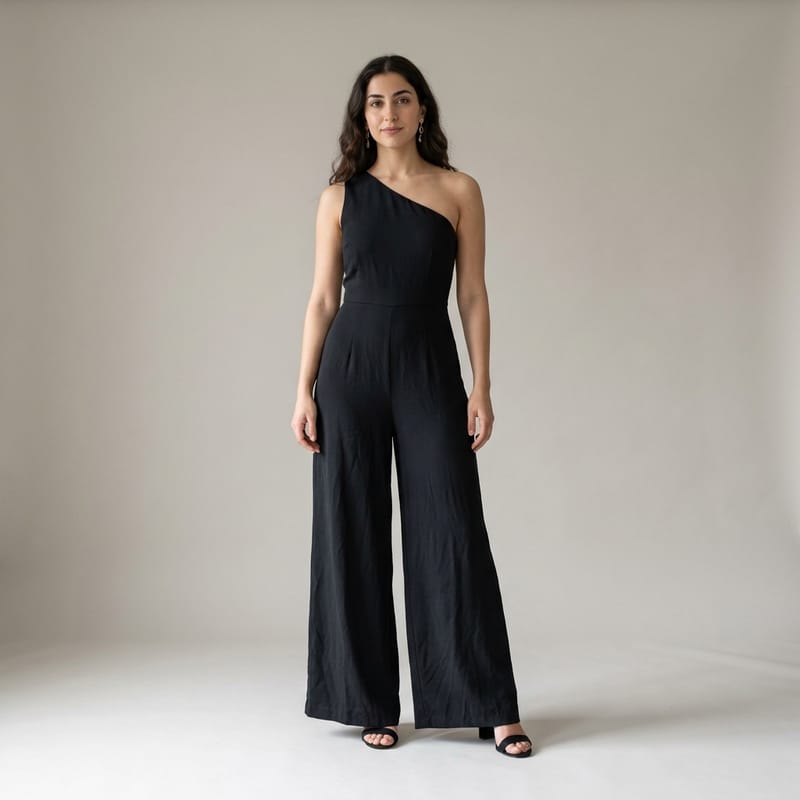
Dressy jumpsuit
When the hour and the venue both say dress up, a floor-length crepe jumpsuit reaches the formal end without a gown. Black is fine at an evening wedding, and the gold earrings keep it festive rather than somber.
Try it on me →Beach and garden weddings
A beach wedding asks for clothes that move in the wind and shrug off sand. Men do well in a linen or light cotton suit, or linen trousers with a crisp shirt and no tie when the invitation is relaxed. Women do well in a flowing midi or maxi dress in chiffon, cotton or linen. Skip anything so tight it shows every gust, or so short the breeze makes it a worry.
A garden wedding is the natural home of florals and soft colors such as sage, dusty blue, lavender and coral. Midi lengths keep hems off wet grass, a light jacket or a wrap helps once the sun goes down, and a hat suits a daytime ceremony as long as it is small enough not to block anyone's view.

Light grey suit
A light grey suit is made for a garden ceremony in the sun: pale enough for daylight, festive without a tie and easy to dress up with one for the vows. The pale blue shirt keeps the whole outfit fresh.
Try it on me →Barn, backyard and city hall weddings
A barn, ranch or farm wedding is usually more relaxed, but it is still a wedding. Chinos with a blazer, a sport coat with an open collar, or a midi dress with ankle boots all fit; jeans only when the couple says so. Floors may be gravel, grass or old boards, and barns get cold after dark, so plan your shoes and bring a layer. The smart casual outfits show the level most rustic weddings expect.
A backyard wedding follows the same logic on a smaller scale: dress as for a good garden party, and find out whether guests will stand or sit on the lawn. A city hall or courthouse wedding is usually short, small and in daylight, and the few guests appear in almost every photo. A good suit without a tie, a blazer with trousers, a sheath or wrap dress or a smart jumpsuit all work, while a gown or a tuxedo would outdress the couple.
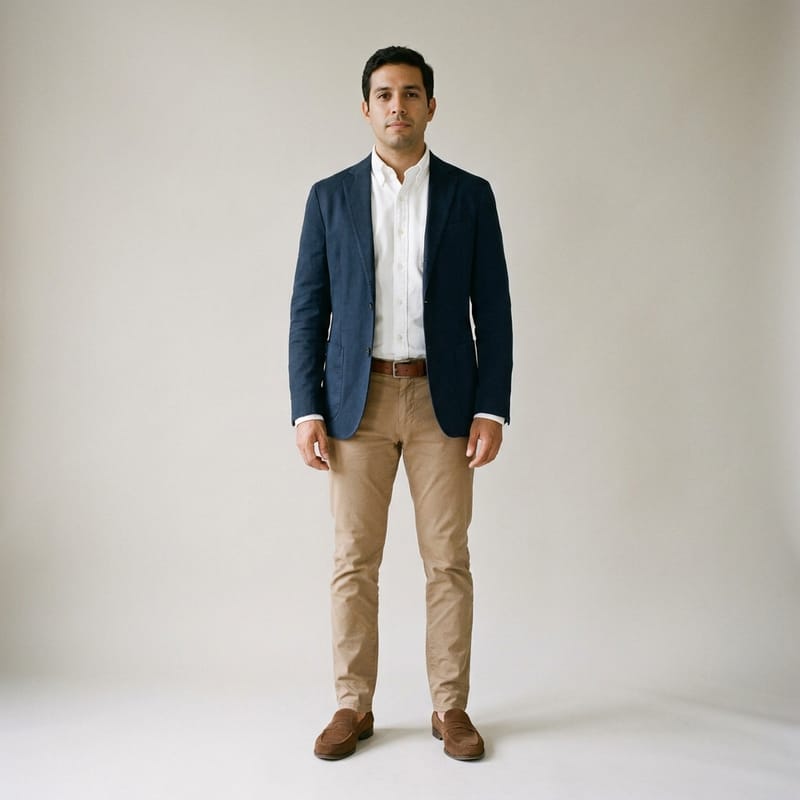
Blazer and chinos
A navy blazer with tan chinos and suede loafers is dressy enough for the vows and relaxed enough for hay bales and string lights. Add a tie for the ceremony if the couple is dressing up.
Try it on me →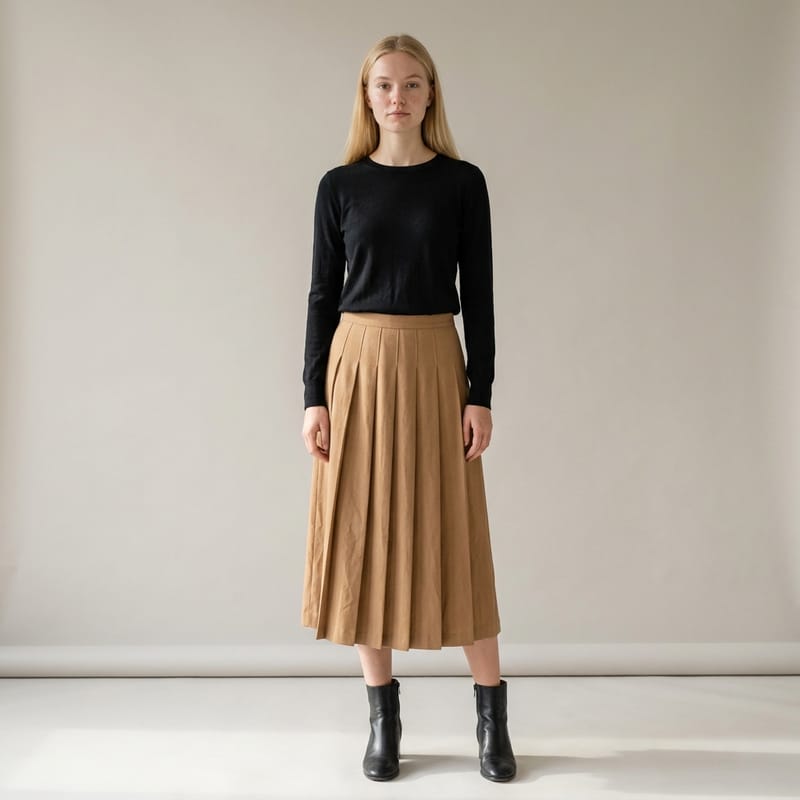
Knit top and midi skirt
A fitted black knit with a pleated camel midi skirt suits a city hall wedding in the cooler months: polished, warm and easy to photograph. The ankle boots handle cobblestones and courthouse steps.
Try it on me →Religious ceremonies: shoulders, knees and head coverings
Many churches, synagogues, mosques and temples expect guests to cover their shoulders and knees, even when the reception afterward is relaxed. A cardigan, a bolero or a large scarf over a sleeveless dress solves it for the ceremony, and a midi or longer hem settles the knee question. Men should plan on long trousers, a shirt with sleeves and usually a jacket.
Some ceremonies ask for more. At a mosque, women usually cover their hair, so bring a scarf. In a gurdwara everyone covers their head and takes off their shoes, and head scarves are usually on hand at the entrance. Many synagogues offer kippahs to men at the door. At a Hindu temple you will often take your shoes off too, so choose a pair that slips off easily.
Colors follow tradition as well. At many Hindu and other South Asian weddings guests wear bright colors, red is often kept for the bride, and all-white or all-black outfits are commonly avoided. At a traditional Chinese wedding red is usually the bride's color too, so guests choose another. When the couple's tradition is new to you, ask them or a family member; it is a welcome question.
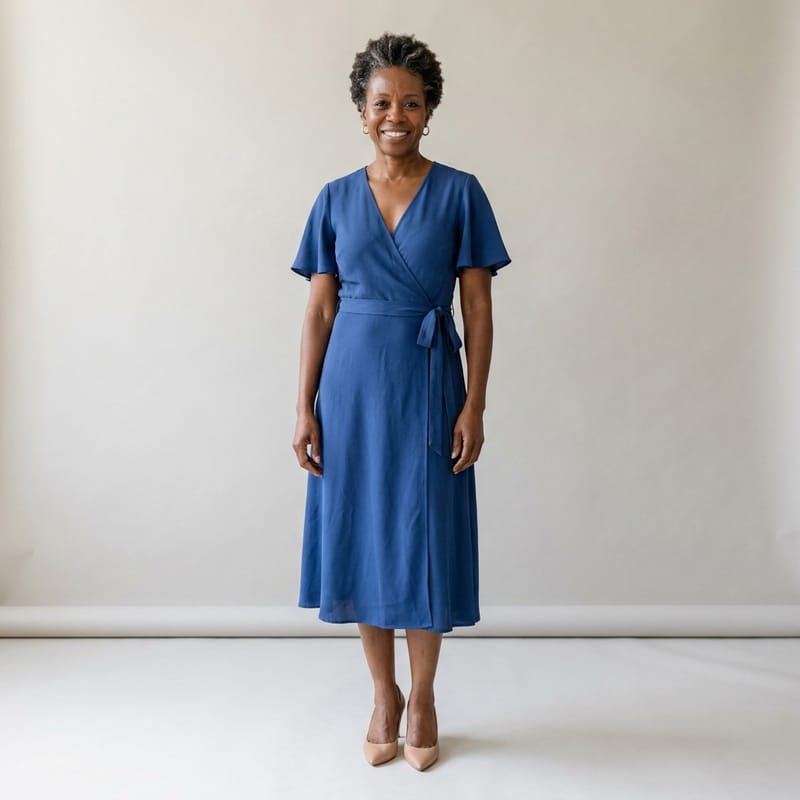
Wrap midi dress
A wrap midi with flutter sleeves meets most ceremony rules without a cover-up: the sleeves cover the tops of the arms, and the hem stays below the knee when you sit. Sapphire blue is a guest color few traditions object to.
Try it on me →Seasons and fabrics
Spring weddings suit pastels and mid-weight fabrics such as cotton, crepe and light wool, with a layer for an evening that can still turn cool. Summer calls for cloth that breathes: linen, cotton, silk and tropical wool. Linen creases quickly, which looks relaxed at a beach wedding and less so at an evening one, and a jacket that comes off easily is a gift on a hot afternoon.
Fall brings deeper colors and heavier cloth: rust, burgundy, forest green and navy in wool, crepe or velvet, with tights or a wrap for the evening. Winter weddings are the time for velvet, heavier satin, long sleeves and flannel suits, plus a coat you can leave at the coat check. Dark, rich colors look at home in candlelight, and closed shoes beat sandals on a cold walk from the car. If a winter evening wedding asks for black tie, the black tie rules still apply under the coat.

Blazer and turtleneck
For a winter wedding without a tie, green wool with a black turtleneck under it looks deliberate rather than underdressed. It keeps you warm between the ceremony and the party, and the chelsea boots cope with a wet parking lot.
Try it on me →Colors to avoid, and safe choices
The one rule nearly every wedding keeps: white belongs to the couple. That includes the near shades that look white in photos, such as ivory, cream, eggshell, very pale champagne and silver, and a pale print on a mostly white background. A white shirt under a suit is fine for men; a head-to-toe white or cream suit is not, unless the couple asks for one.
Avoid matching the wedding party too: if the couple shares its palette, skip the bridesmaids' exact shade. Black is accepted at most evening weddings but can feel somber in daylight, and anything that glitters from head to toe competes with the couple in the photos.
Safe choices are easy to find: jewel tones like sapphire, emerald and burgundy at any time of day; dusty blue, sage, lavender and soft coral for spring and summer; rust, mustard and deep green for fall. For men, a navy, grey or tan suit with a colored tie or pocket square is always right. Prints work when the background is clearly a color, not white.
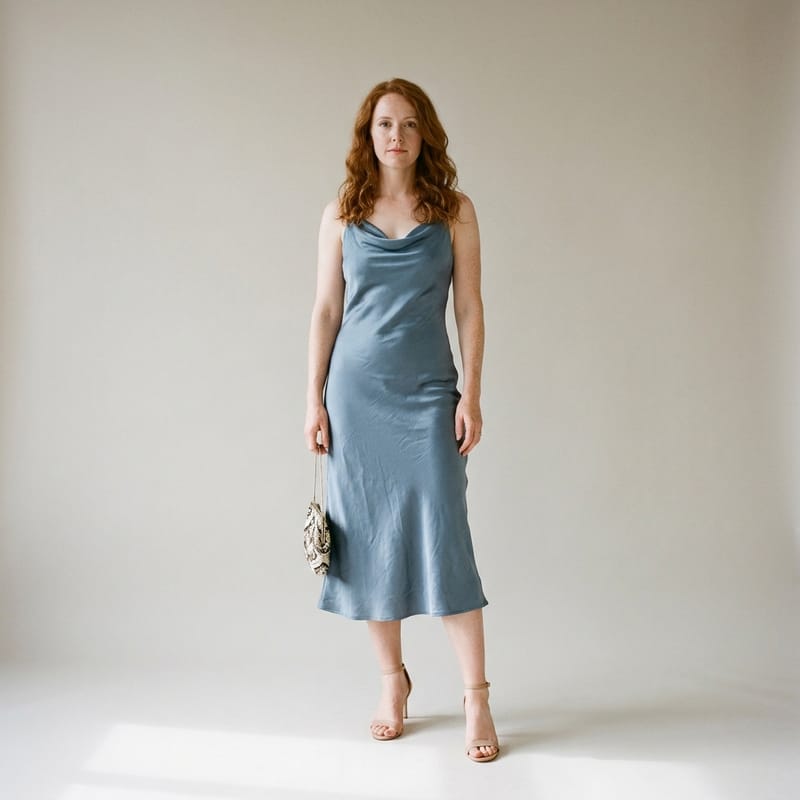
Satin midi dress
Dusty blue is one of the safest guest colors: in photos it reads clearly as a color, even beside a white dress. The bias-cut satin lets the same dress go to a noon ceremony or a candlelit dinner.
Try it on me →Shoes for lawns, sand and dance floors
On a lawn, a thin heel works like a tent peg: it sinks with every step and picks up mud. Block heels, wedges and flat sandals stay on top of the grass, and small heel protectors that slip over a stiletto help if you cannot part with yours. Suede darkens in wet grass, so smooth leather is the better choice when the ceremony starts on a dewy lawn.
Sand defeats almost every heel. Flat leather sandals, espadrilles or bare feet for a ceremony on the beach are all normal, and men can wear loafers without socks or leather sandals at a relaxed beach wedding. For gravel, cobblestones and old barn boards, a low block heel, a loafer or a dressy ankle boot is the safe choice.
Then plan for the dancing. If your ceremony shoes pinch after two hours, slip a pair of flat, foldable shoes into your bag. Break new shoes in at home first, and scuff smooth new soles on a rough sidewalk so they grip a polished floor. The same footwear logic holds at an outdoor graduation.
FAQ
What should a guest wear to a wedding with no dress code?
Go by the time and the place: a daytime ceremony in a garden or at home calls for a light suit or a sundress, an evening one at a hotel or a hall for a dark suit or a cocktail dress. When unsure, a suit or a knee-length or midi dress, the heart of semi-formal, is rarely wrong.
Is black okay at a daytime wedding?
It is accepted at most weddings, but in daylight it can look somber. Lighten it with a print or bright accessories, or choose navy instead.
What colors should you not wear to a wedding?
White and anything that looks white in photos, such as ivory, cream and very pale champagne. Also avoid the bridesmaids' exact color if you know it, and red at many South Asian and Chinese weddings, where it is often the bride's color.
What do you wear to a beach wedding?
Light, breathable fabrics: a linen or cotton suit, often without a tie, or a flowing midi or maxi dress. Choose flat sandals, or go barefoot if the ceremony is on the sand.
What should I wear to a courthouse wedding?
Something one step above everyday, close to smart casual: a suit or a blazer with trousers, a sheath or wrap dress, or a smart jumpsuit. A gown or a tuxedo is usually too much for a short civil ceremony.
Do I need to cover my shoulders at a church wedding?
Many churches and other places of worship expect covered shoulders during the ceremony. Bring a cardigan, a bolero or a shawl if your dress is sleeveless, and take it off at the reception.
What shoes should I wear to an outdoor wedding?
Block heels, wedges, flat sandals or loafers. Thin stiletto heels sink into a lawn, so keep them for indoor venues or fit them with heel protectors.
Can a man wear a suit without a tie to a wedding?
Yes, at most daytime, beach, rustic and city hall weddings, as long as the suit fits well and the shirt is pressed. At a formal or evening wedding, wear the tie.