Dress codes explained, from white tie to casual
A dress code packs a whole outfit into two or three words. "Cocktail attire" on an invitation or "business casual" in an office handbook each stand for a familiar set of clothes, and the guests or colleagues who know the code arrive dressed at roughly the same level.
The codes form a ladder. White tie sits at the top, followed by black tie, formal, cocktail and semi-formal; the office codes run from business formal down to business casual; smart casual and casual close the list. Below, each rung gets what men and women wear, what falls outside it, and the clues an invitation gives when its wording is vague.
How to read a dress code on an invitation
Start with the attire line, usually printed near the bottom of the card or on the event website. Take its words literally: "black tie" is a rule, "black tie optional" an offer to choose, and "black tie preferred" a hint that the hosts would like the dressier choice. When there is no attire line at all, the event itself has to tell you.
Three clues do most of the work. The start time: anything that begins after six in the evening dresses up a level, and black tie by tradition belongs to the evening. The place: a private club, a cathedral or a grand hotel raises the bar, while a park pavilion or a brewery lowers it. The card itself: heavy, engraved or letterpress stock signals a formal event, a digital invite full of emoji does not.
When the clues still disagree, ask the host or someone close to them; it is an ordinary question and nobody minds it. Failing that, aim one level above your best guess. A tie can go into a pocket and a jacket can hang on a chair, but a guest in jeans has no way to add a jacket at the door. Weddings have their own extra hints, covered in what to wear to a wedding.
White tie
White tie is the most formal code in Western dress and the rarest. It appears at state banquets in some monarchies, at some charity and opera balls and a handful of traditional galas, always in the evening. If you receive one, expect a strict code with very little room for interpretation.
For men it means a black tailcoat, cut short at the front with two tails at the back and worn open. Under it go a white wing-collar shirt with a stiff front, a white piqué waistcoat that does not show below the coat, and a white piqué bow tie. The black trousers carry two stripes of satin or braid down the outer seam, and the shoes are black patent leather. A tuxedo, however good, belongs to a different code.
For women the rule is a floor-length evening gown. Long gloves reaching above the elbow are the traditional companion, taken off to eat, and this is the one occasion for your most formal jewelry. Cocktail lengths, jumpsuits and separates are not part of white tie.
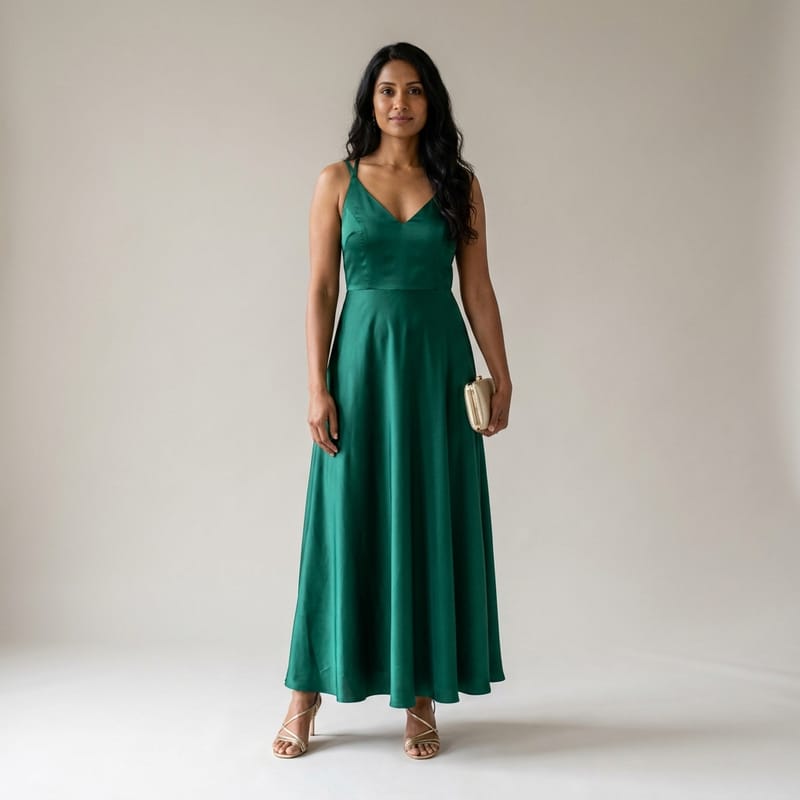
Floor-length gown
A satin gown that reaches the floor has the length white tie asks for. Add long gloves and finer jewelry, and the same dress also covers the black-tie evenings you are far more likely to be invited to.
Try it on me →Black tie, black tie optional and creative black tie
Black tie is the classic evening formal code, used by most formal weddings, galas and award dinners. Men wear a tuxedo, also called a dinner jacket, in black or midnight navy, with lapels faced in satin or grosgrain, trousers with a single stripe, a white dress shirt with studs or hidden buttons, a black silk bow tie, and a cummerbund or a low-cut waistcoat. Shoes are black patent or highly polished leather. In summer and in warm climates, a white or ivory dinner jacket over black trousers is the traditional variation.
Women wear a floor-length gown, which is always correct. Many black-tie events also accept a very dressy cocktail dress or elegant evening separates in a rich fabric such as satin, velvet or crepe, while a short daytime dress or a work suit falls short. Out of bounds for everyone: a regular business suit, sneakers, and anything you would wear to the office.
"Black tie optional" means the hosts will wear black tie and you may join them or take the step below: a dark suit in charcoal, navy or black with a conservative tie for men; a gown, a dressy cocktail dress or polished separates for women. "Creative black tie" keeps the formality but invites personality, such as a velvet dinner jacket, a patterned bow tie or a dark shirt for men, and a bold color, a dramatic sleeve or statement jewelry for women. For weddings with either line, see the formal wedding guest outfits.
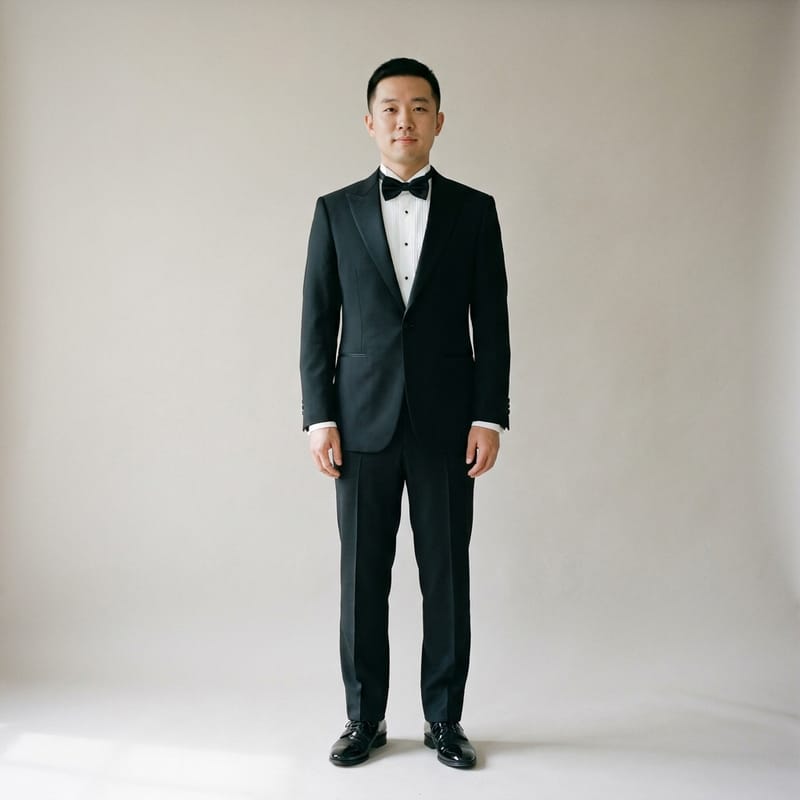
Tuxedo
This tuxedo has every piece black tie expects: satin peak lapels, single-striped trousers, a pleated shirt and a silk bow tie. Wear it to a black tie optional event and you are dressed exactly like the hosts.
Try it on me →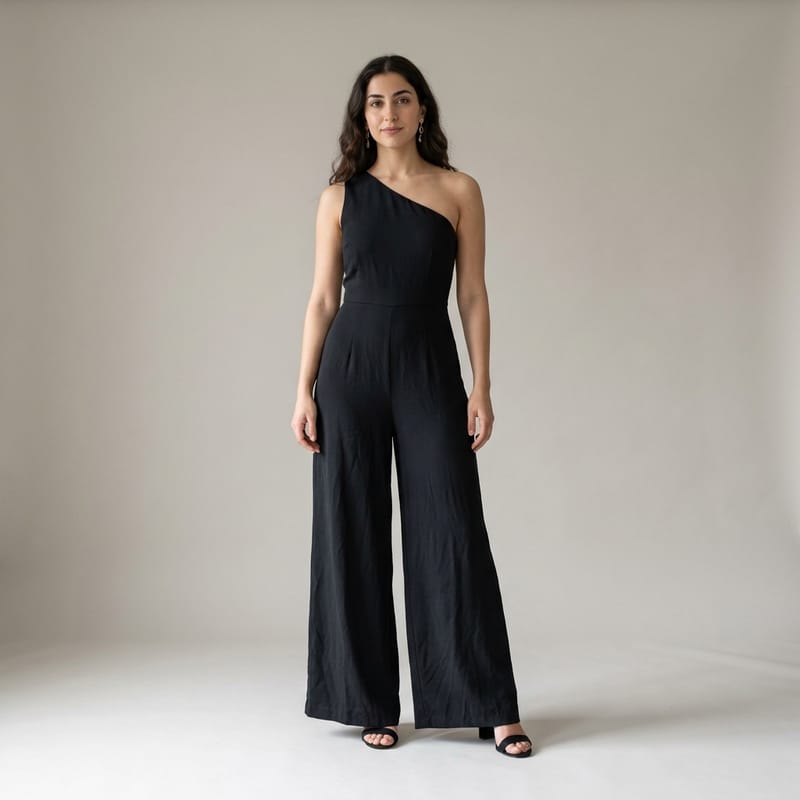
Dressy jumpsuit
A floor-length jumpsuit in black crepe meets black tie optional and creative black tie where a short dress would not. The one-shoulder neckline and gold earrings give it the evening drama the code is after.
Try it on me →Formal
On its own, "formal" usually sits one step below black tie, close to black tie optional. Men wear a dark suit with a white or pale shirt, a silk tie and dark leather dress shoes; a tuxedo is welcome at an evening event but not required. Women have the widest choice here: a long gown, a midi or knee-length dress in silk, satin or crepe, or a tailored evening jumpsuit. Leave out sport coats with odd trousers, open collars and casual sandals.
Formal is also the code where the occasion matters most. A formal daytime event, such as a wedding at noon, allows lighter suits and lighter dress colors; a formal evening calls for dark suits and deeper shades. A funeral is formal in its own way, quiet and modest rather than festive, with its own advice on what to wear to a funeral. The dressiest weddings show the code at its most festive: see what to wear to a formal wedding.
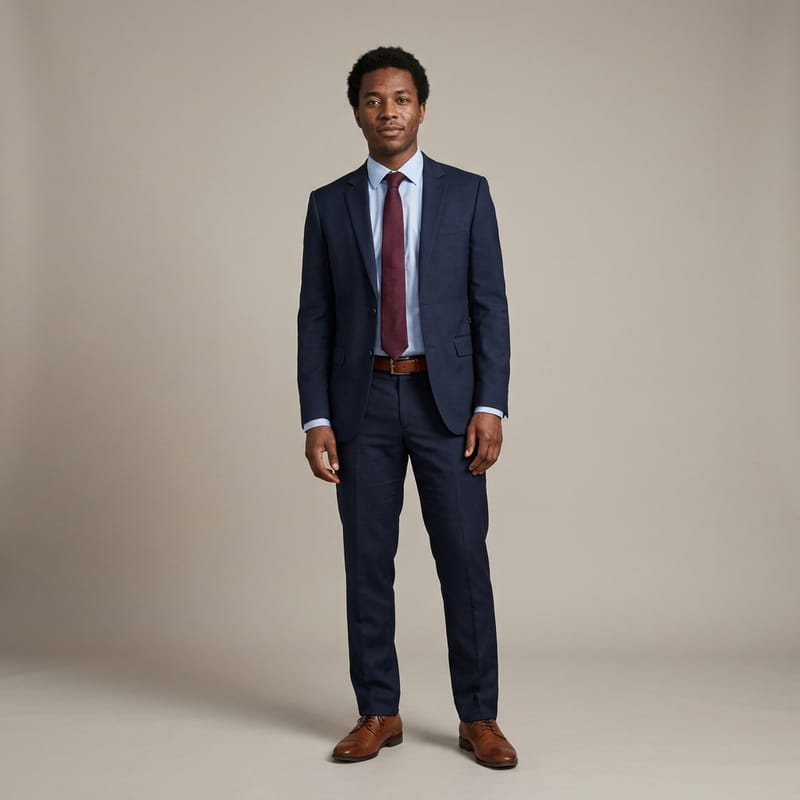
Navy suit and tie
A navy two-piece with a silk tie carries the formal code for men from a noon ceremony to a late dinner. Navy reads a touch warmer than black, which suits a celebration.
Try it on me →Cocktail and semi-formal
Cocktail attire and semi-formal sit in the middle of the ladder and are often used for the same thing: an evening party, a reception or a holiday event where you dress up without going long. Men wear a suit, usually with a tie at a cocktail party and often without one at a semi-formal event; a well-cut blazer over dress trousers works at the relaxed end. Women wear a dress that ends anywhere from the knee to mid-calf, an evening jumpsuit, or silk separates with trousers or a skirt.
What falls outside: a tuxedo or a floor-length gown overshoots, and jeans, sneakers or a plain T-shirt fall short. Cocktail is the more nocturnal of the two, with shorter hemlines, a bit of shine and bolder color; semi-formal stretches to daytime, where a lighter suit or a printed midi dress is right. The semi-formal outfits cover both ends of it.
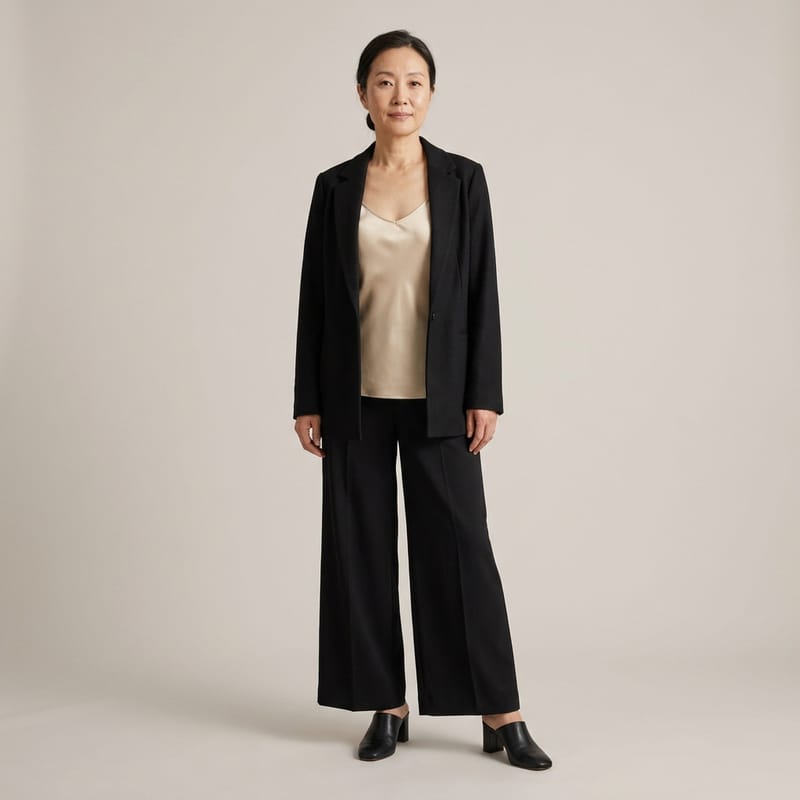
Silk top and wide-leg trousers
Separates are the easiest way to land in the middle of the ladder. The black blazer and wide trousers carry the formality, and the champagne silk underneath adds the evening shine cocktail attire likes.
Try it on me →Business formal, business professional and business casual
The office has its own ladder. Business formal is the top rung, used for board meetings, formal business dinners and award events: a dark suit with a tie, a white or light blue shirt and dark leather shoes for men; a dark skirt suit or pantsuit, or a tailored dress with a jacket, and closed-toe pumps for women.
Business professional is the everyday suit code of law firms, banks and many client-facing roles. Suits are still the norm, but colors and patterns can be lighter: a mid-grey suit, a patterned tie, a colored blouse or a sheath dress with a blazer. If you are not sure which of the two an employer means, the job interview outfits show where a suit is the safe answer.
Business casual drops the suit. Men pair chinos or wool trousers with a pressed shirt, adding a sweater or a blazer as the day needs; women wear tailored trousers or a knee-length skirt with a blouse or a knit, or a simple dress, with loafers, flats or low heels. Jeans, sneakers, T-shirts and gym clothes usually fall outside it. It is also the code most courts ask of their jurors; see what to wear to jury duty.

Skirt suit
A charcoal skirt suit over an ivory shell is business formal for women at its most classic, right for a board presentation or a formal client dinner. Closed-toe pumps and a knee-length skirt keep it within the strictest office code.
Try it on me →
Navy pantsuit
A navy pantsuit over a white blouse answers both business formal and business professional, depending on what you pair with it. Swap the blouse for a colored shell top and it relaxes into the everyday suit code.
Try it on me →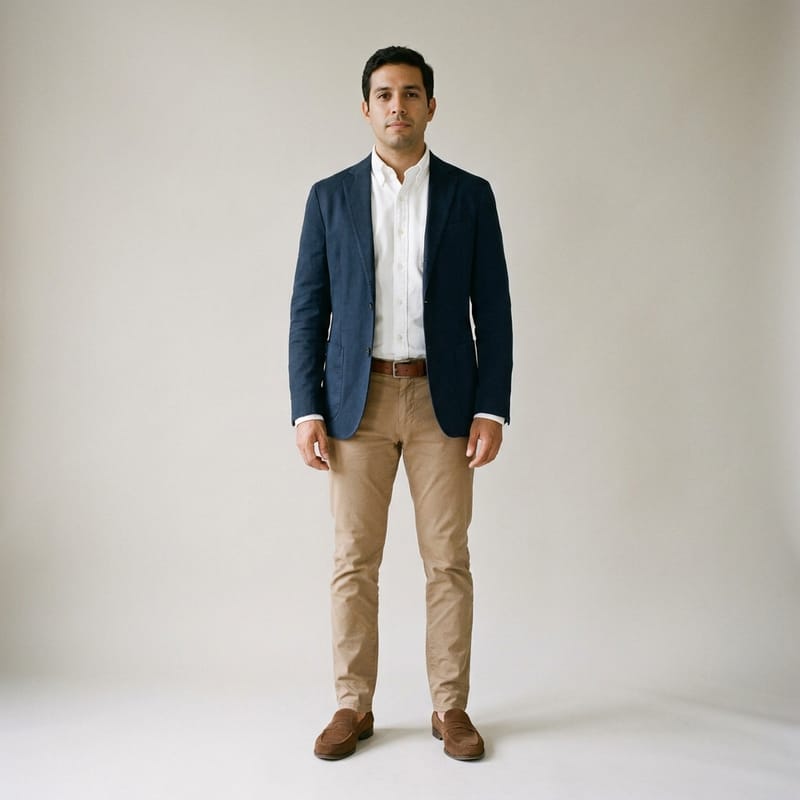
Blazer and chinos
Business casual for men needs little more than an unstructured navy blazer, a white oxford, tan chinos and suede loafers. Leave the blazer on the chair and it is still business casual; swap the loafers for clean sneakers and it slides toward smart casual.
Try it on me →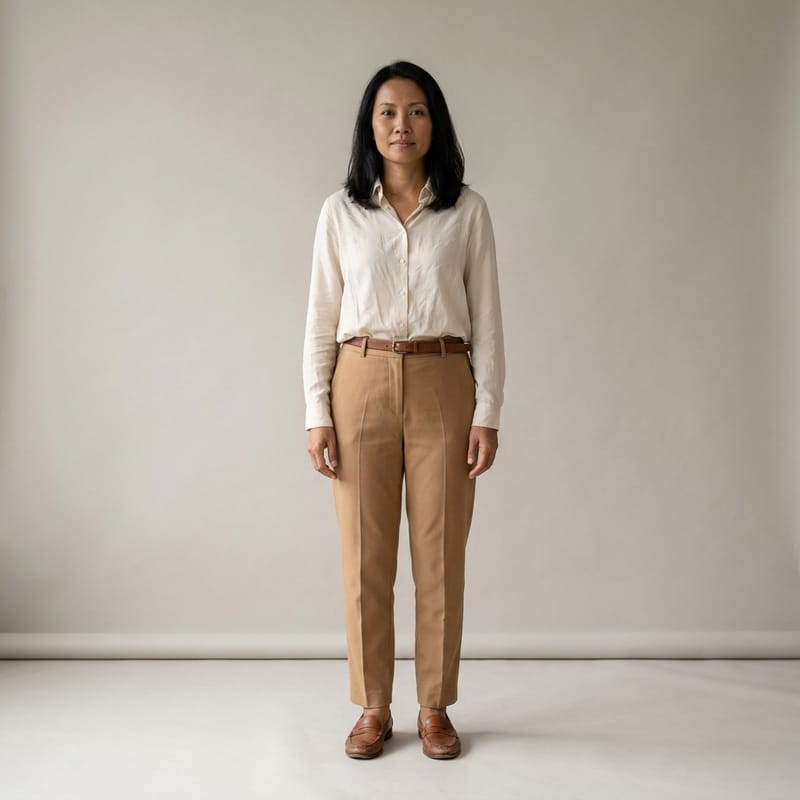
Blouse and tailored trousers
A cream blouse with high-waisted camel trousers shows that business casual for women needs no jacket to look finished. The tucked-in blouse and the belt keep it neat enough for a client meeting.
Try it on me →Smart casual, dressy casual and casual
Smart casual mixes something tailored, a blazer, pressed chinos or a pleated skirt, with something easy, such as dark jeans, a knit or a plain T-shirt, and finishes with clean leather shoes or minimal sneakers. It covers many office Fridays, dinners and gallery openings. What does not belong: athletic wear, worn-out sneakers, ripped denim and slogan T-shirts. The smart casual outfits sit right on its line.
"Dressy casual" turns up on party and graduation invitations and sits just above casual: no blazer needed, but a pressed shirt, chinos or a sundress rather than shorts and flip-flops. The graduation outfits are a good picture of it.
"Casual" is the one code where shorts in summer, everyday sneakers and lighter jeans are fine, but it still asks for clean clothes in good repair that suit the place. Casual for a backyard barbecue and casual for a family photo shoot are not the same, which is why the family picture outfit ideas plan a palette as carefully as a dressier code would.

Blazer and jeans
This is smart casual reduced to three pieces, and it works for men and women alike. Take off the blazer and you are casual; add a collared shirt and loafers and you are close to business casual.
Try it on me →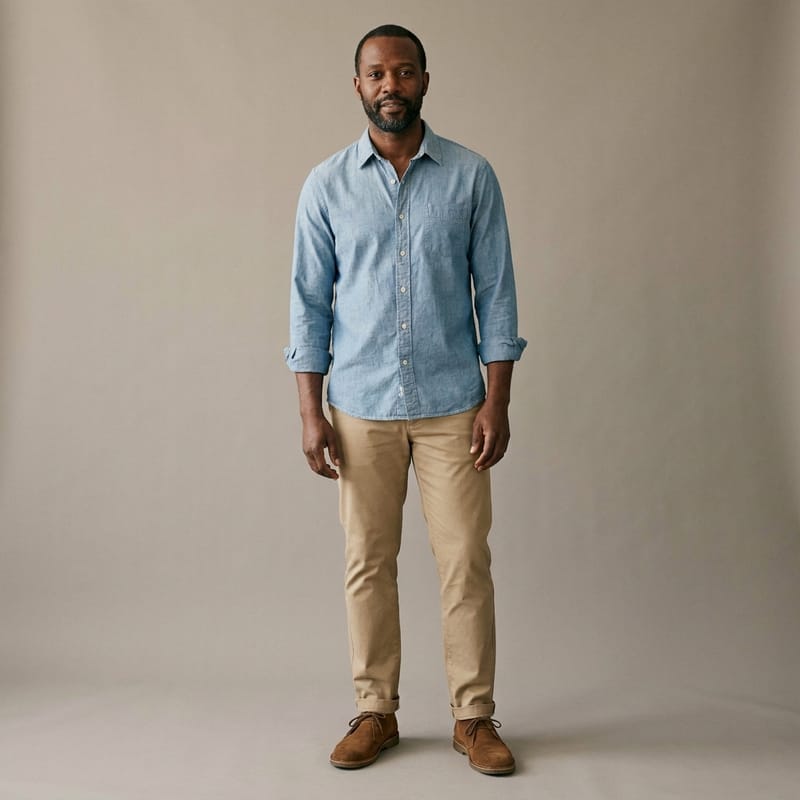
Chambray shirt and khakis
A chambray shirt with khakis is casual done neatly, the kind of outfit that works at a daytime party or an outdoor family gathering. The rolled sleeves and suede boots keep it relaxed without looking careless.
Try it on me →FAQ
What is the most formal dress code?
White tie. Men wear a black tailcoat with a white waistcoat, a wing-collar shirt and a white bow tie, and women wear floor-length evening gowns, often with long gloves.
What is the difference between black tie and black tie optional?
At black tie, men are expected in tuxedos and women in gowns or equally formal evening wear. Black tie optional lets men choose a dark suit and tie instead, and women a dressy cocktail dress or separates.
What does creative black tie mean?
It is black tie with room for personality: a velvet or colored dinner jacket, a patterned bow tie, a bold gown or statement jewelry. The formality stays the same; only the rules on color and detail relax.
Can women wear pants to a black-tie event?
Yes, at most black-tie events today, as long as the outfit is as dressy as a gown: a floor-length evening jumpsuit, or wide-leg trousers in silk or crepe with an elegant top. At white tie, a gown is still the rule.
What is the difference between business professional and business casual?
Business professional expects a suit or a tailored dress with a jacket. Business casual swaps the suit for separates: wool trousers or chinos with a shirt, a blouse or a fine knit, and a blazer only if you like.
What should I wear if the invitation has no dress code?
Read the start time, the venue and the style of the card: an evening event at a formal venue calls for at least a suit or a cocktail dress, a daytime event in a park or a home for smart casual. If it is still unclear, ask the host.
Does "casual" on an invitation mean jeans are fine?
Usually yes, as long as they are clean and in good shape and the rest of the outfit suits the occasion. At a wedding, even "casual" means a step above what you would wear to run errands.
What does "festive attire" mean?
It is usually cocktail attire with a seasonal mood: a velvet blazer, a colored tie, a sequined or jewel-toned dress. It is common on holiday party invitations.